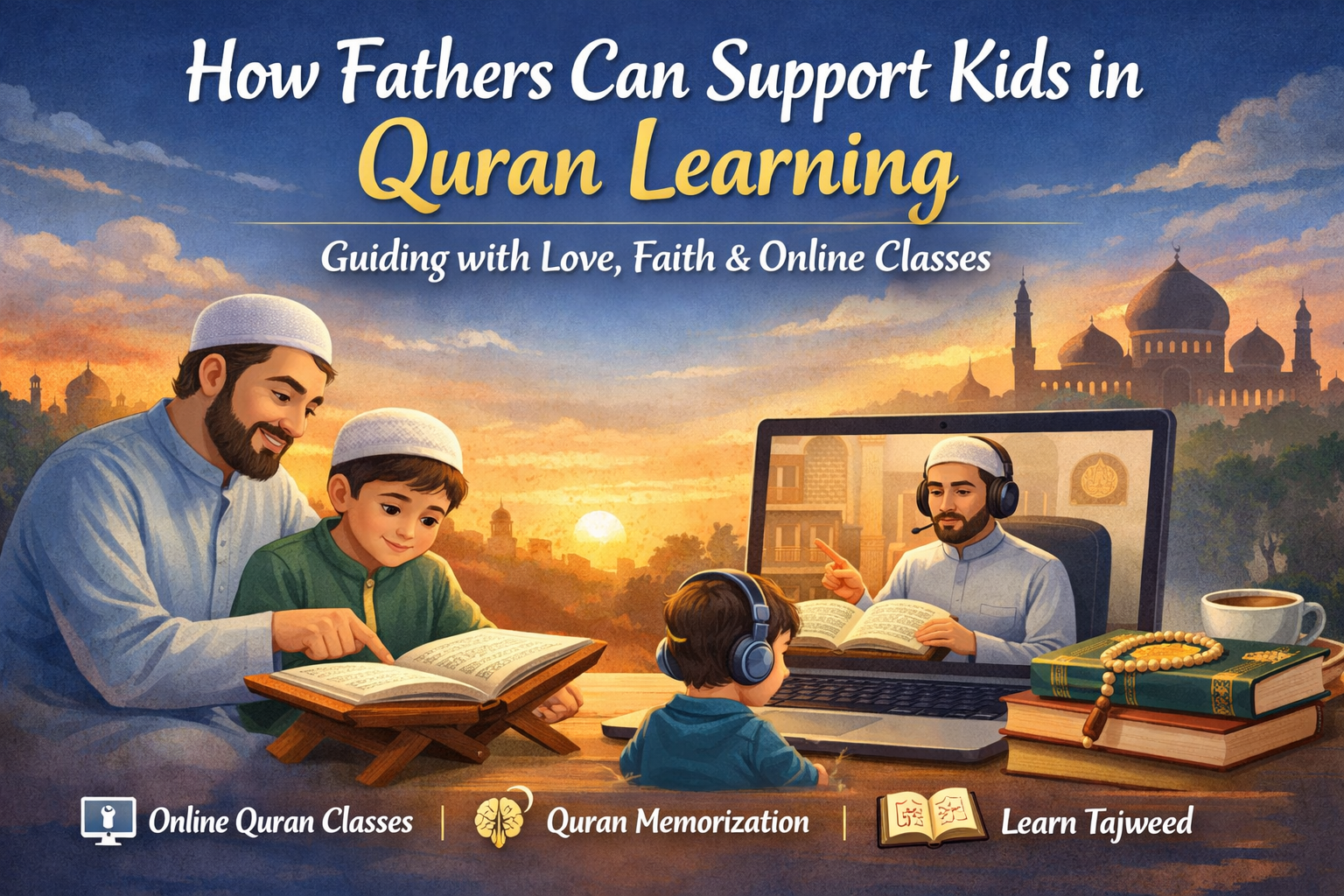
In many families, mothers are often seen as the primary caregivers when it comes to children’s education and daily routines. However, when it comes to Quran learning, the role of fathers is equally important—if not more impactful. Fathers set the tone for discipline, consistency, and spiritual seriousness in a child’s life. In today’s digital age, where online Quran classes and structured learning platforms are widely available, fathers have more opportunities than ever to actively support their children’s Islamic education.
This blog explores practical, meaningful, and realistic ways fathers can support their kids in Quran learning, especially through modern solutions like online Quran classes for kids, while building a strong emotional and spiritual bond along the way.
Children learn more from what they observe than what they are told. When a father shows love and respect for the Quran, children naturally develop the same feelings.
A father who:
Recites Quran regularly
Makes time for prayer
Talks about Islamic values in daily life
creates an environment where Quran learning feels natural, not forced. Even if a father is not a scholar, his effort matters. Sitting with your child during recitation or revising lessons from Quran courses online sends a powerful message: “This matters to our family.”
Every child learns differently. Some children are visual learners, some are good listeners, while others need repetition and encouragement. Fathers can play a key role in selecting the right learning method.
Today, many families prefer online Quran classes for kids because they offer:
Flexible schedules
Qualified teachers
One-on-one attention
Safe learning from home
For families living abroad, especially, online Quran classes for kids in USA are a blessing. They help children stay connected to their faith while growing up in a non-Muslim society.
One of the biggest challenges in Quran learning is consistency. Children may start enthusiastically but lose motivation over time. Fathers can help by setting routines and maintaining discipline with kindness.
Simple steps include:
Setting a fixed time for classes
Creating a quiet, respectful learning space
Ensuring devices and internet are ready before class
Encouraging attendance even on busy days
Whether your child is enrolled in an online Quran academy or private sessions, a father’s involvement ensures learning does not become irregular or optional.
Many fathers focus on Quran reading but overlook correct pronunciation. Tajweed is essential to recite the Quran as it was revealed.
By enrolling children in Online Tajweed Classes, fathers help them:
Learn proper Arabic pronunciation
Avoid common recitation mistakes
Build confidence in reading aloud
When children Learn Quran with Tajweed online, they gain a deeper respect for the Quran and a stronger connection to its words. Fathers can motivate kids by listening to their recitation and appreciating their progress, even if small.
Hifz (memorization) is a noble goal, but it requires patience, consistency, and emotional support. Fathers should remember that memorization is not a race.
If your child is enrolled in Quran memorization classes, you can support them by:
Encouraging revision instead of pressure
Celebrating milestones (even short surahs)
Avoiding comparisons with other children
Making dua for their success
A calm and supportive father helps children associate Quran memorization with peace, not stress.
Children often recite beautifully but do not understand what they are reading. Fathers can deepen their child’s love for the Quran by encouraging understanding alongside recitation.
Quran translation classes help children:
Understand Allah’s message
Relate Quranic teachings to daily life
Build strong Islamic character
Fathers can discuss simple meanings at home, ask questions like, “What did you learn today?”, and relate Quranic lessons to real-life situations. This transforms Quran learning from a task into a life guide.
Some parents assume that once a child is enrolled in online Quran classes in USA, their role is finished. In reality, online learning works best when parents stay involved.
Fathers can:
Occasionally sit in during classes
Communicate with teachers
Monitor progress and feedback
Encourage practice outside class hours
Online platforms are tools, not replacements for parental involvement. A child who feels supported at home performs better in class.
A home that respects the Quran naturally motivates children. Fathers can help build this environment by:
Playing Quran recitation at home
Setting family Quran time once a week
Avoiding distractions during learning hours
Speaking positively about teachers and classes
Whether your child is studying through quran courses online or local resources, the home environment plays a huge role in long-term success.
Fathers often want the best for their children, but too much pressure can backfire. Quran learning should be rooted in love, not fear.
Healthy motivation includes:
Encouragement instead of criticism
Rewards for effort, not just results
Understanding your child’s limits
A supportive father helps children develop a lifelong relationship with the Quran—not one based on obligation, but on love and respect.
One of the most beautiful outcomes of shared Quran learning is the bond it creates between father and child. When fathers actively participate—listening, learning, and growing alongside their kids—the Quran becomes a shared journey.
Years later, children may forget many lessons, but they will remember:
Their father listening to their recitation
His encouragement during difficult lessons
His pride in their progress
This emotional connection is one of the greatest gifts a father can give.
In today’s world, where distractions are everywhere, helping children stay connected to the Quran is a responsibility and an honor. Fathers play a central role in shaping how children view Islamic learning—whether as a burden or a blessing.
By choosing the right online Quran academy, supporting consistency, encouraging Tajweed, understanding, and memorization, and most importantly, leading with love and example, fathers can ensure their children grow up with a strong, meaningful relationship with the Quran.

