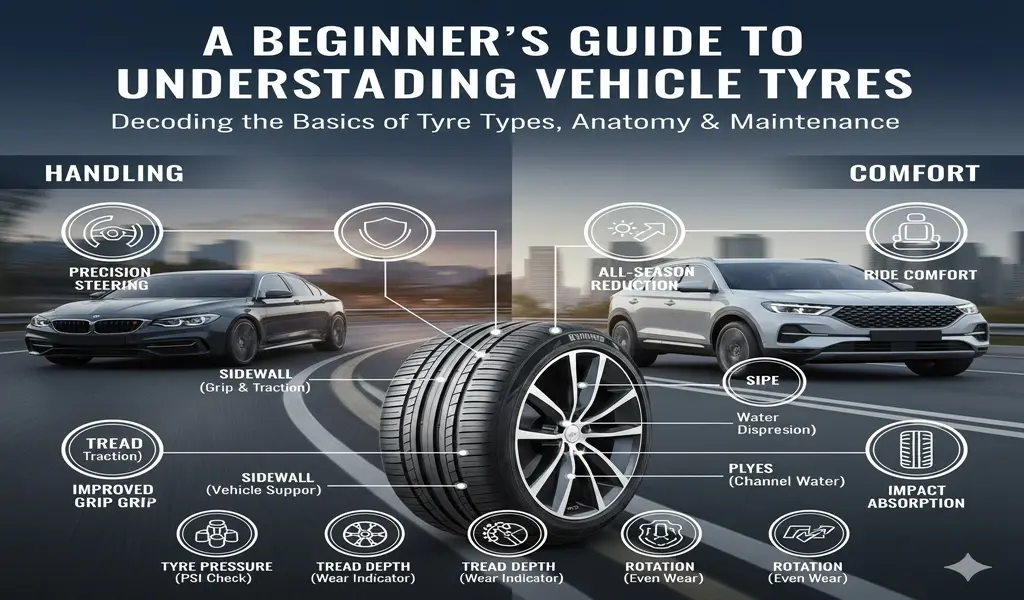
For many new drivers, tyres are just the black rubber circles that keep the car moving. We often ignore them until a flat occurs or a mechanic suggests a replacement. However, tyres are complex engineering marvels that serve as your only contact with the road.
They are arguably the most critical safety feature on your automobile. Understanding vehicle tyre basics is essential for anyone who gets behind the wheel. This is especially true in the UAE where driving conditions can be demanding.
The region brings intense heat, long stretches of highway, and busy city traffic. These factors put immense stress on your tyres every single day. A basic understanding helps you maintain safety and performance.
Knowing how your tyres work can save you money on fuel and repairs. It also gives you confidence when speaking with service technicians. You do not need to be an expert to master the essentials.
This guide will break down everything you need to know about tyres. We will cover how to read them, how to maintain them, and when to change them. By the end, you will be better equipped to handle UAE roads safely.
Tyres do much more than just roll along the asphalt. They are responsible for supporting the entire weight of your vehicle and passengers. They transfer the engine’s power to the ground to move you forward.
Additionally, they absorb shocks from uneven road surfaces to keep you comfortable. Most importantly, they are responsible for stopping the car when you hit the brakes. Without good tyres, even the best brakes cannot save you in an emergency.
For first time car owners UAE has to offer, this knowledge is a priority. The extreme summer temperatures can cause tyre blowouts if maintenance is ignored. Understanding vehicle tyre basics helps you spot risks before they become accidents.
It also helps you get the best value for your money. Tyres that are properly selected and maintained last much longer. This reduces the long-term cost of vehicle ownership significantly.
Safety is the number one reason to care about your tyres. The tread pattern provides grip on the road surface. This grip allows you to steer accurately and corner without skidding.
In emergency situations, fractions of a second matter. Worn or under-inflated tyres increase your braking distance. This means it takes longer for the car to stop completely.
On high-speed roads like Sheikh Zayed Road, this delay can be dangerous. Proper tyres ensure that your anti-lock braking system works effectively. They are your first line of defense against road hazards.
Beyond safety, tyres dictate how your car feels to drive. A high-quality tyre absorbs road noise and vibration. This makes the cabin quieter and the ride smoother.
If you feel the steering wheel shaking, it is often a tyre issue. Poor quality or damaged tyres transmit every bump to your spine. This leads to driver fatigue during long commutes.
Selecting the right tyre can transform a rough ride into a luxury experience. It allows you to arrive at your destination feeling fresh. Comfort is a key part of the daily driving experience.
To understand vehicle tyre basics, we must look at the anatomy of a tyre. It is not just a solid chunk of rubber. It is a layered construction of fabric, steel, and synthetic materials.
These layers work together to provide strength and flexibility. Knowing these parts helps you understand inspection reports. It also helps you understand why damage to certain areas is dangerous.
The tread is the part of the tyre that touches the road. It features grooves and channels designed to disperse water and dust. This design prevents hydroplaning on wet surfaces.
Tyre tread patterns vary depending on the intended use of the tyre. Some are designed for silence, while others are designed for grip. As you drive, this rubber wears away slowly.
Tread depth is a measure of how much usable rubber remains. When the tread is too low, the tyre loses its ability to grip. This is why monitoring tread wear is a vital maintenance task.
The sidewall is the vertical side of the tyre between the tread and the rim. It contains all the important markings and information about the tyre. It also provides lateral stability to the vehicle.
The stiffness of the sidewall affects handling and comfort. A stiff sidewall provides better cornering but a harder ride. A softer sidewall absorbs bumps better but may feel less precise.
The sidewall is also the most vulnerable part of the tyre. Hitting a curb can damage the internal structure here. Unlike the tread, sidewall damage usually cannot be repaired safely.
The bead is a loop of high-strength steel cable coated in rubber. It sits inside the tyre edge and holds it tightly against the wheel rim. An airtight seal at the bead is essential for maintaining pressure.
Inside the tyre, there are layers called plies. Radial vs bias tyres refers to how these plies are arranged. Almost all modern passenger cars use radial construction for better durability.
Steel belts run under the tread to provide puncture resistance. These internal components ensure the tyre keeps its shape at high speeds. They are the hidden backbone of tyre safety.
One of the most confusing aspects for beginners is tyre size meaning. The string of numbers on the sidewall looks like a secret code. However, it is actually a standardized system used globally.
Decoding these tyre sidewall markings allows you to buy the right replacement. It ensures that the new tyre fits your car perfectly. Using the wrong size can affect your speedometer and handling.
Let us break down a standard sequence. The first number indicates the width of the tyre in millimetres. A wider tyre generally offers more grip but uses more fuel.
The second number is the aspect ratio or profile. It represents the height of the sidewall as a percentage of the width. Lower numbers mean a shorter sidewall, often found on sports cars.
The letter ‘R’ stands for Radial construction. The next number is the rim diameter in inches. This tells you what size wheel the tyre fits.
The final number and letter represent the tyre load index and tyre speed rating. The load index tells you the maximum weight the tyre can carry. The speed rating indicates the maximum safe speed for the tyre.
Tyre sizes vary greatly depending on the vehicle type. Sedans usually have smaller, narrower tyres compared to SUVs. Manufacturers select the size to balance economy and performance.
When learning tyre sizing, beginners may notice formats such as 245/50r20, which help indicate width, sidewall height, and wheel compatibility. This specific size is often found on larger crossovers or SUVs.
Always check your owner’s manual or the door jamb sticker for the correct size. Never guess when it comes to tyre dimensions. Sticking to the factory specification is the safest choice.
Not all tyres are created equal. Different rubber compounds and tread designs serve different purposes. Part of learning vehicle tyre basics is knowing which type suits your lifestyle.
In the UAE, the climate dictates which tyres are most effective. Using the wrong type can lead to rapid wear or safety issues. Here are the main categories you will encounter.
All-season tyres are designed to be a jack-of-all-trades. They offer acceptable performance in dry, wet, and mild conditions. They are a popular choice for budget-conscious drivers.
They tend to have a longer tyre lifespan guide rating than performance tyres. However, they may not excel in extreme heat or extreme cold. For many daily commuters, they are a sufficient option.
Summer tyres are ideal for UAE driving conditions. They are made from a rubber compound that withstands high heat. They do not get too soft on scorching asphalt.
These tyres provide maximum grip on dry roads. They offer excellent braking performance and stability. Most cars in the Gulf region come fitted with summer tyres from the factory.
Performance tyres are a subset of summer tyres. They prioritize grip and handling over comfort and longevity. They are usually found on sports cars and luxury vehicles.
If you drive a 4×4 and explore the desert, you need specialized tyres. Off-road tyres have aggressive tread blocks to dig into sand and gravel. They have reinforced sidewalls to resist cuts from rocks.
However, these tyres can be noisy on the highway. All-terrain tyres offer a middle ground between road comfort and off-road capability. They are a great choice for weekend adventurers in Dubai.
Tyres are consumable items that degrade with use. Friction with the road surface naturally wears down the rubber. However, certain factors can accelerate this process significantly.
Understanding wear patterns is a key part of beginner car maintenance. It can tell you if your car has other mechanical issues. Catching these signs early saves you money.
If a tyre wears out on one side only, your alignment is likely off. This means the wheel is not pointing straight. It drags the tyre across the road rather than rolling smoothly.
If the center of the tyre wears out faster, it is usually over-inflated. If the edges wear out while the center remains good, it is under-inflated. Correct pressure ensures even wear across the width.
Worn suspension parts can also cause “cupping” or patchy wear. This results in a loud rumbling noise while driving. Regular inspections help identify these problems.
The sun is the biggest enemy of rubber components. UV rays break down the chemical bonds in the tyre. This leads to dry rot and cracking on the sidewall.
Hot weather tyres are designed to resist this, but they are not immune. Parking in the shade whenever possible helps extend tyre life. Pressure fluctuations due to heat also stress the tyre structure.
In the UAE, tyres are often replaced due to age rather than tread wear. The rubber becomes hard and loses grip after a few years. This makes them dangerous even if they look new.
You do not need to be a mechanic to maintain your tyres. Simple habits can prevent accidents and extend tyre life. These checks take only a few minutes but offer huge benefits.
Incorporating these tyre maintenance tips into your routine is essential. It ensures your vehicle is always ready for the road. Here is what you should do regularly.
Air pressure supports the weight of your car. Tyres lose a small amount of air naturally over time. You should check the pressure at least once a month.
Use a reliable gauge and check when the tyres are cool. Driving generates heat which increases pressure readings. Always inflate to the manufacturer’s recommended level.
Don’t forget to check the spare tyre as well. There is nothing worse than having a flat and finding the spare is empty. Correct pressure improves daily commuting UAE safety.
Tread depth is critical for water dispersion. Most tyres have “wear bars” molded into the grooves. When the tread is flush with these bars, it is time to replace.
You can also use a simple tread depth gauge. The legal limit is usually 1.6mm, but replacing at 3mm is safer. Bald tyres are a major hazard on sandy or wet roads.
Tyres generally last between three to five years in the UAE. Check the manufacturing date code on the sidewall. It is a four-digit number indicating the week and year of production.
If you see deep cracks, bulges, or cuts, replace the tyre immediately. Do not attempt to repair sidewall damage. Your safety is worth more than the cost of a new tyre.
There is a lot of misinformation about tyres. Believing these myths can compromise your safety. One common myth is that tyres last until the tread is gone. In reality, age matters just as much.
Another myth is that the maximum pressure on the sidewall is the correct pressure. This is false; always follow the door sticker. Some believe you only need to check pressure before a long trip. Routine checks are necessary for Dubai road safety.
Beginners also think expensive tyres are a waste of money. Quality tyres offer better braking and handling. They are an investment in your safety and vehicle performance.
Most tyres last three to five years depending on driving and maintenance.
Yes, high temperatures increase air pressure and require frequent checks.
It is not recommended, matching tyres ensure balanced handling.
The size is printed on the tyre sidewall and in the owner manual.
No, correct size matters more than width for safety and comfort.
In conclusion of this blog, Understanding vehicle tyre basics is a responsibility for every driver. It empowers you to keep your vehicle safe and efficient. By knowing how to read markings and check conditions, you avoid unnecessary risks.
Make it a habit to inspect your tyres regularly. Check the pressure, look for damage, and monitor the tread. These small actions make a massive difference in your driving experience.
Remember that tyres are the foundation of your vehicle’s performance. Investing in good tyres and maintaining them properly is smart. It ensures you and your passengers stay safe on every journey.

